4.9/5 · 10,000+ Patients | Clinics in Chennai | 10+ Years of Expertise
+91 73581 99693

Hair Restoration · Doctor-Led Care

Is Hair Transplant Right For You?

Hair loss doesn't always mean you need a hair transplant. At CFH, we first understand your hair loss, scalp condition, donor area and goals. Then our doctors recommend whether hair transplant surgery, another treatment, or simply a different approach is right for you.

Not every patient needs surgery.
That's the point of starting with a proper assessment.
Doctor-Led Assessment
Personalized Treatment Plan
Advanced Hair Restoration
Long-Term Follow-Up
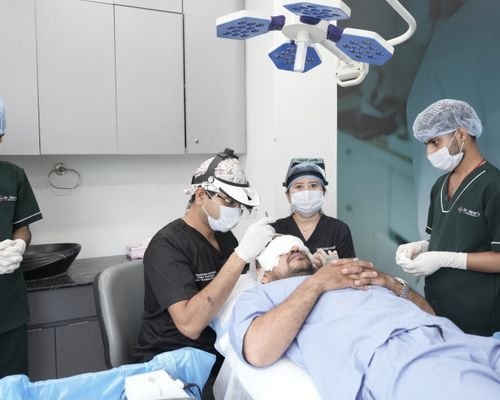
CFH surgical team performing a hair transplant procedure
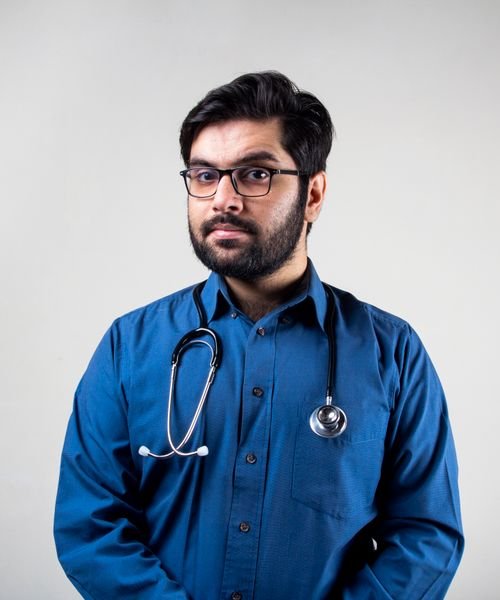
CFH doctor
Doctor-Led Assessment Personalised Treatment Plan Trusted by 10,000+ Patients
4.9/5800+ Google Reviews

Before You Decide

Hair Transplant Is Not The First Question.

Hair loss can have different causes, stages and patterns. A transplant may be appropriate for some patients, while others may benefit from non-surgical treatment or medical management first. That's why CFH doesn't recommend a procedure simply because you asked for one.

Understand Your Hair Loss
"Why are you losing your hair?" We understand first. Then we recommend.
The CFH S.U.R.E.™ Method

Your Hair Deserves A Diagnosis Before A Procedure.

Every treatment begins with understanding, not assumptions. The CFH S.U.R.E.™ Method is our doctor-led approach to understanding your condition before recommending what's right for you.

"We don't recommend treatments because we offer them. We recommend them because they're right for you."
Book Your Consultation
S
Step 01 · Scan

Understand Your Scalp & Hair

We examine your scalp, hair density, pattern of loss and donor area to understand what we're working with.

U
Step 02 · Understand

Find What Is Driving The Problem

Your hair history, lifestyle, medical factors and pattern of hair loss all matter.

R
Step 03 · Recommend

Choose What Actually Fits

If transplant is appropriate, we'll explain why. If another treatment makes more sense, we'll tell you that instead.

E
Step 04 · Evaluate

Don't Stop At The Procedure

Your progress matters after treatment too. We monitor your recovery and response so your plan can evolve when necessary.

Making the right decision is just as important as getting the right treatment.

Is Surgery Right For You?

A Hair Transplant Isn't Right For Everyone.

A transplant generally requires enough healthy donor hair and an area where transplanted follicles can grow. The underlying cause and pattern of hair loss also matter. A doctor may assess:

  • Your pattern and extent of hair loss
  • Donor hair availability
  • Scalp condition
  • Hair characteristics
  • Age and progression of hair loss
  • Medical or lifestyle factors
  • Your expectations and long-term goals
A proper consultation helps determine what's right for you.
Whether surgery is appropriate, another treatment should come first, or waiting and monitoring makes more sense.
Get a Doctor-Led Assessment
Your Hair Loss Stage Matters

The Same Treatment Doesn't Make Sense At Every Stage.

Earlier Stages

Hair loss may sometimes be managed with non-surgical or medical approaches depending on the cause and diagnosis.

Progressive Stages

The focus may shift toward preserving existing hair while assessing whether restoration procedures could help.

Advanced Stages

For suitable patients with sufficient donor hair, hair transplantation may become an option.

The stage alone doesn't decide your treatment. Your diagnosis does.
From Consultation To Restoration

Here's What Your Hair Transplant Journey Looks Like.

Consultation

Tell us what you're experiencing, what you've tried and what you want to achieve.

Hair & Scalp Assessment

Your doctor evaluates your hair loss pattern, scalp and donor area.

Personalized Plan

If transplant is appropriate, your doctor explains the recommended approach and why.

Hairline & Graft Planning

The plan considers your existing hair, donor supply and long-term appearance.

Procedure

The selected technique is performed with appropriate clinical and safety protocols.

Recovery & Follow-Up

You'll receive aftercare guidance and progress monitoring throughout your recovery.

The Technique Depends On You

FUE, DHI Or Sapphire? Let's Start With Your Hair.

Different techniques can be discussed as part of your treatment plan.

FUE

Individual follicular units are extracted from the donor area and transplanted into the recipient area.

DHI

A method of implantation designed to give the surgeon control over placement and direction of transplanted follicles.

Sapphire

A variation involving sapphire blades for creating recipient sites.

There is no "best technique" for everyone. The right technique depends on your hair loss, donor area, goals and clinical assessment.
The Person Behind The Procedure

Technology Matters. The Doctor Matters More.

A hair transplant isn't simply about moving grafts from one place to another. The planning of the following can influence how natural the result looks:

  • Hairline
  • Density
  • Graft placement
  • Donor preservation
  • Angle and direction
  • Long-term hair-loss progression
Trust Block

Meet The Doctors Behind Your Treatment.

Dr. Bala V
Dr. Bala V
Founder & Chief Restoration Surgeon
15+ Years Experience · Hair Transplant Expert
Dr. Rajesh K
Dr. Rajesh K
Trichologist
10+ Years Experience · Hair & Scalp Specialist
Real People, Real Results

Real Patient Transformations

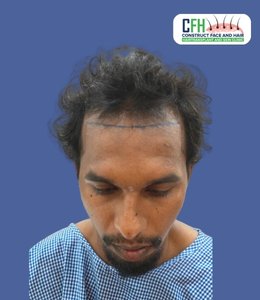
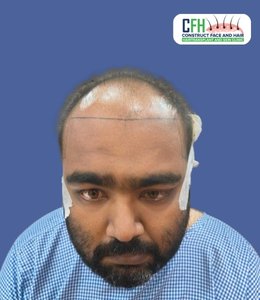
BEFOREHair Transplant Before - Case 01
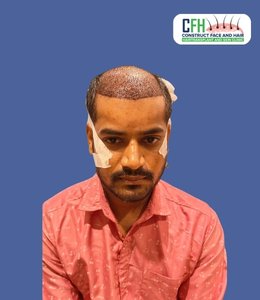
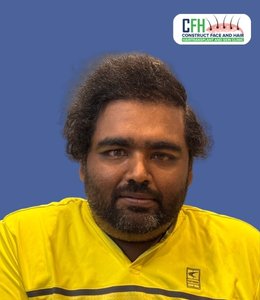
AFTERHair Transplant After - Case 01
Hairline Restoration
FUE Hair Transplant · Case 01
View Story
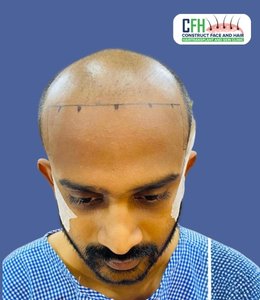
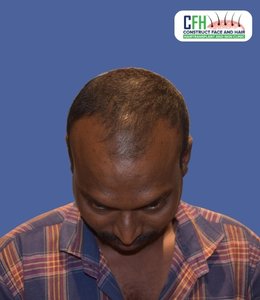
BEFOREHair Transplant Before - Case 02
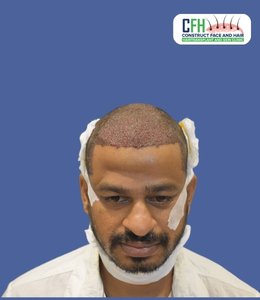
AFTERHair Transplant After - Case 02
Hairline & Frontal Density
FUE Hair Transplant · Case 02
View Story
BEFOREHair Transplant Before - Case 03
AFTERHair Transplant After - Case 03
Hairline Redefinition
FUE Hair Transplant · Case 03
View Story
BEFOREHair Transplant Before - Case 04
AFTERHair Transplant After - Case 04
Crown & Density Restoration
FUE Hair Transplant · Case 04
View Story
BEFOREHair Transplant Before - Case 05
AFTERHair Transplant After - Case 05
Hairline & Temple Restoration
FUE Hair Transplant · Case 05
View Story
BEFOREHair Transplant Before - Case 06
AFTERHair Transplant After - Case 06
Frontal Area Restoration
FUE Hair Transplant · Case 06
View Story
BEFOREHair Transplant Before - Case 08
AFTERHair Transplant After - Case 08
Crown & Scalp Coverage
FUE Hair Transplant · Case 08
View Story
BEFOREHair Transplant Before - Case 09
AFTERHair Transplant After - Case 09
Hairline Design & Density
FUE Hair Transplant · Case 09
View Story
BEFOREHair Transplant Before - Case 10
AFTERHair Transplant After - Case 10
Advanced Hairline Framing
FUE Hair Transplant · Case 10
View Story
BEFOREHair Transplant Before - Case 11
AFTERHair Transplant After - Case 11
Complete Density Restoration
FUE Hair Transplant · Case 11
View Story
Social Proof

CFH Through Their Eyes.

Day Of My Hair Transplant
Reel 28.4K
Patient Story

Day Of My Hair Transplant: Step-by-Step Experience

Patient Experience · FUE Procedure
Watch on Instagram
7 Days Post-Op Recovery
Reel 19.8K
Recovery Guide

7 Days Post-Op Care: Hair Washing & Scab Removal

CFH Clinical Team · Post-Op Care
Watch on Instagram
12 Months Hair Transplant Results
Reel 45.2K
Real Results

12 Months Later: The Density & Natural Hairline Results

Case 01 · 3,200 Grafts FUE
Watch on Instagram
Dr. Bala explaining graft calculation
Reel 33.1K
Doctor's Insight

How Many Grafts Do You Really Need? Dr. Bala Explains

Dr. Bala V · Chief Surgeon
Watch on Instagram
Hair Transplant Anaesthesia and Comfort
Reel 22.6K
Patient FAQ

Does It Hurt? Anaesthesia & Pain Management During Surgery

Dr. Rajesh K · Trichologist
Watch on Instagram
Crown and Frontal Hair Transplant Coverage
Reel 16.7K
Clinical Insights

Crown vs Frontal Hairline: Why Planning Matters Most

CFH Surgical Team · S.U.R.E.™ Method
Watch on Instagram
Social Proof

Loved By Thousands.

4.9

Based on 800+ Google Reviews
Read All Google Reviews

“

The team explained everything clearly before recommending surgery, and only after a proper scalp assessment.

— Aravind, Chennai
“

I appreciated that they discussed non-surgical options first instead of pushing me straight into a transplant.

— Karthik, Coimbatore
“

Professional team, honest about timelines, and follow-up care has been consistent.

— Vignesh, Bangalore
Realistic Expectations

Hair Restoration Takes Time.

A transplant isn't an overnight transformation. After surgery, transplanted hairs may temporarily shed before new growth begins.

Day 0 Procedure
Weeks 2–8 Temporary shedding can occur
Around Month 4 New growth may begin
Months 6–9 Progress becomes increasingly noticeable
9–12+ Months Results continue developing

Your timeline can vary depending on individual factors and the treatment plan recommended by your doctor.

We'd Rather You Know

Every Procedure Has Considerations.

A consultation should cover:

  • Recovery — What you may experience after the procedure.
  • Temporary shedding — Why transplanted hair may shed before regrowth.
  • Possible complications — Including infection, bleeding, scarring or graft-related issues.
  • Future hair loss — Existing non-transplanted hair can continue to thin, which is why long-term planning matters.

We want you to understand the decision before you make it.

Why Patients Choose CFH

A Clinic Built On One Simple Belief.

Doctor-Led Diagnosis
Personalized Planning
Honest Recommendations
Advanced Hair Restoration
Long-Term Thinking
Follow-Up Care
Free Guide

Not Sure If You Need a Hair Transplant?

Download the free guide: The Hair Transplant Decision Guide.

  • How to understand your hair-loss stage
  • What makes someone a potential candidate
  • When non-surgical options may be considered
  • Questions to ask before choosing a clinic
  • What to expect from consultation to recovery
  • Questions to ask your surgeon
The Hair Transplant
Decision Guide

Understand. Assess. Decide With Confidence.

Frequently Asked Questions

Find Answers To Common Questions.

Can't find what you're looking for? Book a free consultation with our doctors.

No. Suitability depends on your donor hair availability, scalp condition, pattern of hair loss and overall health, which is why a doctor-led assessment comes first.

A consultation and scalp assessment is the only reliable way to know. Your doctor will evaluate your hair loss pattern, donor supply and goals before recommending anything.

There is no single ideal age. Doctors often consider whether your hair loss pattern has stabilised enough to plan a durable, natural-looking result.

In some cases, yes. Non-surgical options such as GFC, PRP or medical management may be considered first, depending on the cause and stage.

Existing non-transplanted hair can continue to thin over time. This is why long-term planning and follow-up care are part of your treatment plan from the start.

Initial recovery is generally within a couple of weeks, though this varies by individual. Your doctor will provide aftercare guidance specific to your procedure.

Early growth can appear around the fourth month, while fuller results generally take considerably longer and vary between patients — often 9–12 months or more.

Neither is universally "better." The right technique depends on your hair loss, donor area, goals and clinical assessment.

Sapphire is a variation of FUE that uses sapphire blades to create recipient sites. Your doctor can explain which approach may suit your case.

The procedure is typically performed under local anaesthesia, and most patients report manageable discomfort. Your doctor will discuss what to expect.

Cost depends on the technique, number of grafts and your individual treatment plan. Your doctor can provide a personalised estimate after your assessment.

Transplanted hair is generally intended to be permanent, though individual results and long-term hair health can vary and should be discussed with your doctor.

Ask about your specific diagnosis, why a technique is recommended for you, expected timelines, risks, and what happens if your hair loss continues after the procedure.

These answers are general information and not a substitute for a doctor's assessment.

You Don't Need To Decide Today

You Just Need The Right Information.

Talk to a CFH doctor about your hair loss, understand your options, and find out whether hair transplant surgery is actually right for you.

Be SURE. Before You Do It.™

CFH doctor portrait